

 Mediamec
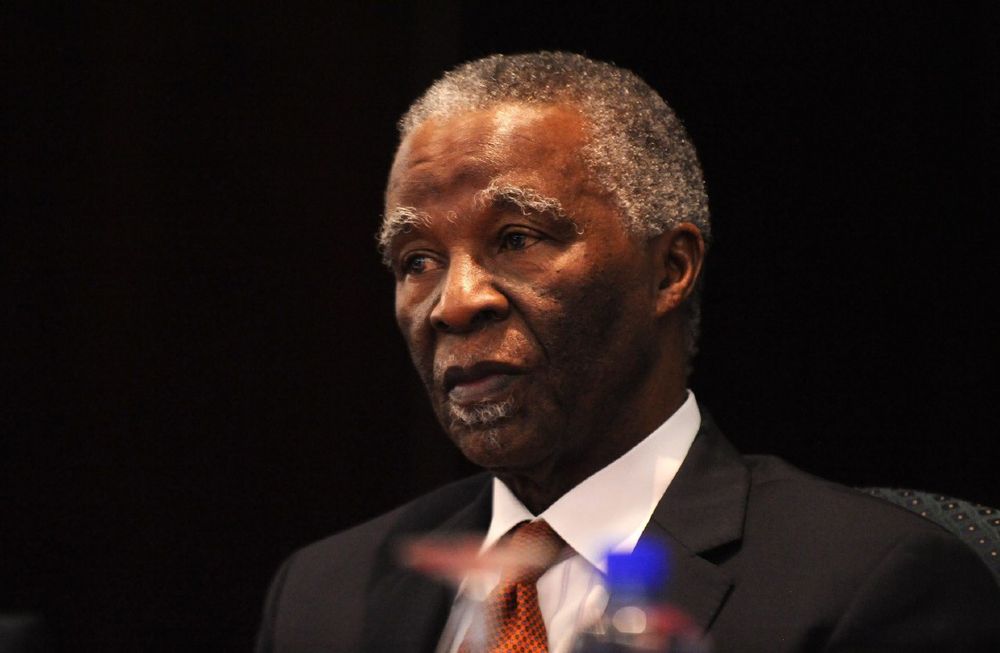
Former president Thabo Mbeki’s objection to Advocate Paul Hoffman’s questioning at the Khampepe Commission has drawn criticism that he missed an opportunity to address racial prejudice more directly.
The commission, chaired by retired judge Sisi Khampepe, is investigating delays in prosecutions arising from the Truth and Reconciliation Commission (TRC).
During his testimony, Mbeki complained to Khampepe about Hoffman’s approach, describing it as “very superior, very condescending” and saying the advocate had made insulting remarks.
Mbeki questioned what could be done about Hoffman’s attitude and urged South Africans to confront ingrained behaviour as part of building a new society.
Commenting on the exchange, Abbey Makoe, founder and editor-in-chief of Global South Media Network, argued that Mbeki had rightly challenged the treatment but stopped short of addressing its broader implications.
Makoe interpreted Hoffman’s conduct as racially prejudiced. He said the encounter reflected tensions that remained embedded in South African society more than three decades after the transition to democracy.
His central criticism concerned Mbeki’s statement that he did not know what could be done. Makoe argued that the former president’s experience in government and the liberation struggle placed him in a strong position to propose a response to racism.
He also linked the exchange to the racial and economic divisions Mbeki highlighted during his presidency. Mbeki, who succeeded Nelson Mandela in 1999, repeatedly described South Africa as having two economies: one predominantly white and prosperous, the other predominantly black and struggling.
For Makoe, that history provided an opportunity for Mbeki to move beyond a complaint about an individual’s conduct and address the enduring effects of apartheid and inequality.
Makoe nevertheless praised Mbeki’s compassion towards Hoffman after the advocate disclosed that his 34-year-old daughter had died by suicide.
He described Mbeki’s response as an expression of Ubuntu-Botho, while maintaining that building a more equal society required political leaders to confront racial prejudice explicitly.