 Mediamec
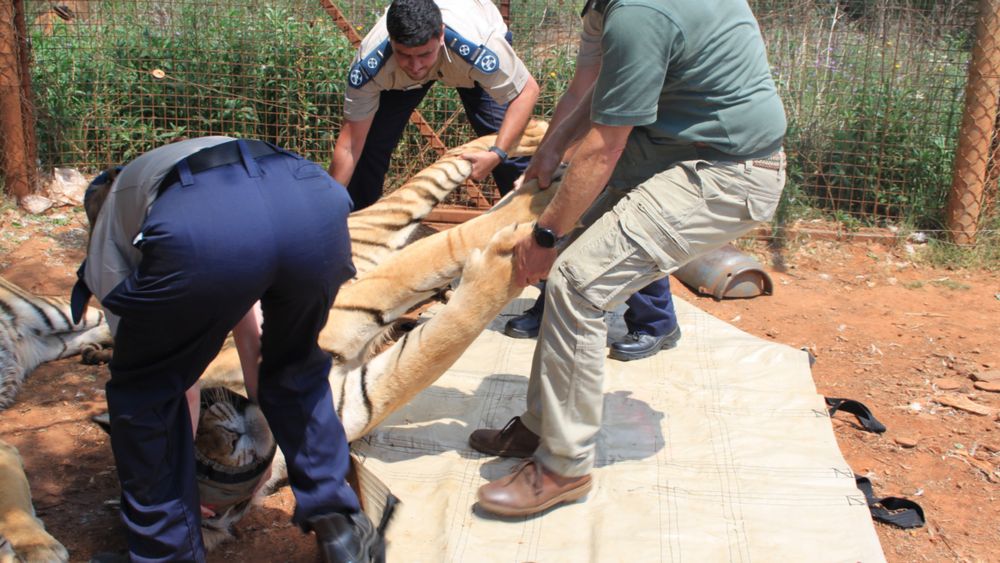
Three Bengal tigers and an African serval have been seized from a predator breeding facility in North West after NSPCA inspectors reported filthy enclosures and injuries that had not received veterinary attention.
The organisation’s Wildlife Protection Unit carried out the removal under a warrant, assisted by a wildlife veterinarian and police officers from Groot Marico. All four animals were safely moved to a secure location for veterinary assessment and ongoing care.
According to the NSPCA, two of the tigers were housed in an enclosure littered with accumulated faeces and decaying food remains, including chicken carcasses, feathers and bones.
A third tiger had a pronounced limp, with inspectors finding no evidence that it had been treated by a veterinarian. The serval had a large, untreated wound on its right hind leg.
Inspectors also raised concerns about cramped enclosures housing indigenous and exotic animals. The NSPCA alleged that fencing between neighbouring enclosures allowed lions and tigers to fight through it.
The property had no working cold-storage facilities for meat, the organisation said. Staff reportedly fed the predators carcasses from cattle and chickens that had already died.
During a follow-up inspection in June 2026, attended by a provincial environmental official, the owner reportedly acknowledged that electric fencing around the predator enclosures had been out of operation since 2021.
The NSPCA submitted its findings to the North West Department of Economic Development, Environment, Conservation and Tourism, which had issued the facility’s permit.
Chief Inspector Douglas Wolhuter, manager of the Wildlife Protection Unit, condemned the conditions. He said the case reinforced the NSPCA’s opposition to the captive predator industry, which the organisation believes puts profits ahead of animal welfare.
The NSPCA has opened a case concerning alleged breaches of the Animals Protection Act 71 of 1962 and is gathering evidence for the docket.
It is the second animal cruelty docket involving the facility. The first, opened in 2021, remains pending.