

 Mediamec
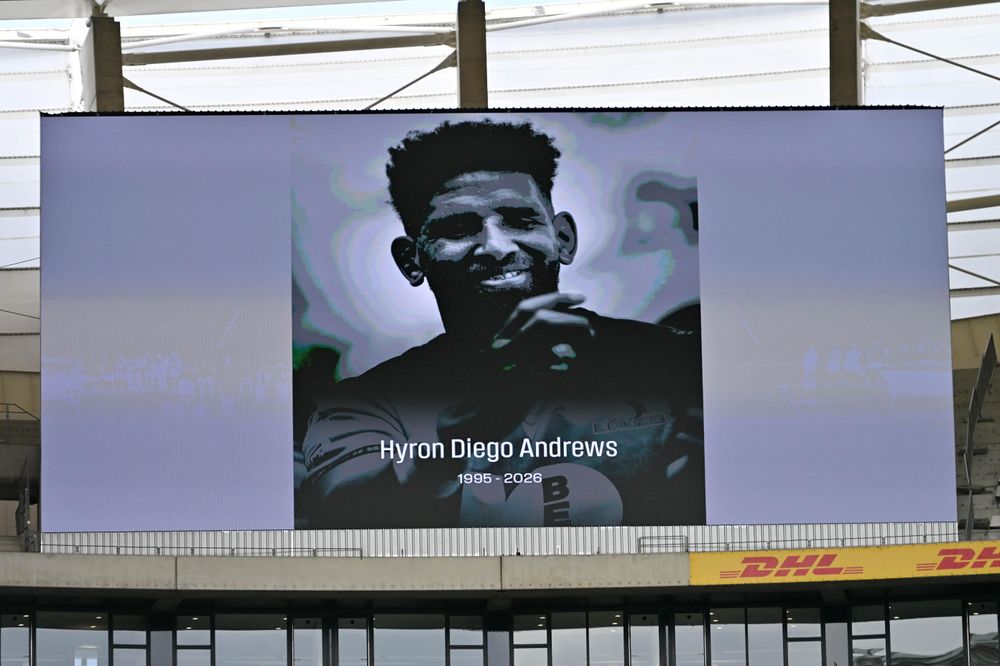
The death of Lions lock Hyron Andrews in France last week has brought renewed grief to rugby, recalling earlier tragedies that left lasting scars on players, coaches and families.
From fatal injuries on the field to sudden deaths while teams were travelling, those losses have shaped lives far beyond the sport.
In March 2009, Brumbies player Shawn MacKay was struck by a car outside a nightclub on Durban’s Umgeni Road after his team had played the Sharks in a Super Rugby match.
Sharks prop Jannie du Plessis, a medical doctor, was among the first to help. He revived MacKay, who had been unresponsive, but the Brumbies player remained unconscious. MacKay died a week later from complications following surgery.
Durban had witnessed another devastating loss five years earlier, during the 2004 World Under-19 Rugby Championship at Kings Park.
Ireland captain John McCall suffered a fatal heart attack during his team’s opening match against New Zealand. Ireland subsequently withdrew from the tournament.
Stephen Ferris, who played alongside McCall in the back row that day, described the experience in a BBC interview a decade later. He recalled seeing his captain on the ground after several phases of play, without initially understanding the seriousness of the situation.
At half-time, forwards coach Allen Clarke told the players their teammate was fighting for his life. They learnt of McCall’s death while gathered in a huddle after the final whistle.
Ferris, who went on to represent Ireland and the British & Irish Lions, recalled falling to his knees in tears. He returned to Kings Park with the Lions in 2009, when the Springboks won the first Test 26-21.
In South Africa, the death of Western Province fullback Chris Burger remains a defining tragedy in the game’s history.
Burger was playing against Free State in a Currie Cup match in Bloemfontein on August 30, 1980. Near the end of the match, he collected a kick and was caught in possession by two opponents.
The 28-year-old broke his neck in the resulting maul and died in hospital early the next morning.
His teammate and former Springbok captain, Morne du Plessis, later recalled that Burger was still conscious when he visited him in hospital. Burger worried that he had let the team down and asked Du Plessis to ensure his family would be cared for.
That request helped inspire a lasting commitment to injured rugby players. The Chris Burger-Petro Jackson Players’ Fund continues to support seriously injured players and their families.
Another sudden loss confronted Rassie Erasmus in 2016, only months after he became Munster’s director of rugby.
Munster coach Anthony “Axel” Foley died in his sleep from heart failure while the team were in Paris for a Champions Cup fixture.
Erasmus took over as head coach for the rest of the season before joining the Springboks in 2017. He has since described his time at Munster, and Foley’s influence, as central to his development as both a coach and a person.
After the Springboks won the 2019 World Cup, Erasmus promised an Irish journalist that he would take his winner’s medal to Foley’s grave.
“Axel played a big part in my coaching career. I would not be the coach I am if it were not for Axel,” Erasmus said.